Fax:
+1(639)571 1665
-
en
-
-


The core performance differences of coated aluminium coils are mainly determined by the coating system. Different types of coatings are different in terms of weather resistance, corrosion resistance, decorative texture, and overall cost, corresponding to different application scenarios and project positioning. From an industry-wide classification perspective, mainstream coated aluminium coil products can be divided into four main types: polyester(PE) coatings, high-weather-resistant polyester coatings, fluorocarbon(PVDF) coatings, and functional special coatings. Each coating type has corresponding performance standards and applicable working conditions.
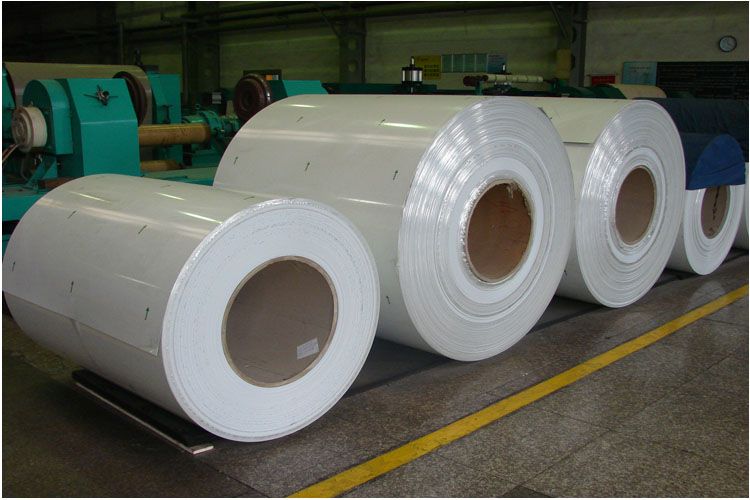
Polyester (PE) coated aluminium coils are the industry's basic and general-purpose product, and also the most widely used entry-level category in the market. The coating uses linear polyester resin as the main film-forming substance, combined with pigments and additives, and is cured through a double-coat, double-bake process. The dry film thickness on the front side is typically controlled at 20–30 μm, while the back side is coated with an epoxy primer with a thickness ≥8 μm. PE coatings have good formability, vibrant and rich colors, and outstanding cost-effectiveness. Under normal outdoor conditions, the service life is approximately 8–10 years, and the coating adhesion can reach ASTM D3359 4B level, meeting the needs of most building decoration, interior decoration, appliance panels, and general hardware. From practical experience, PE coatings are more suitable for inland areas with ordinary climates and for indoor and semi-outdoor applications where weather resistance requirements are not high, offering significant cost advantages for bulk purchases.
High-weather-resistant polyester (HDP) coated aluminum coils are an upgraded category of polyester systems, positioned in the mid-range weather-resistant market. By introducing cyclic structures and weather-resistant functional groups into the polyester molecular chain, and adding a high proportion of UV absorbers and light stabilizers, the coating's aging resistance is improved by more than 40% compared to ordinary PE. With a dry film thickness of 25–35 μm, a color difference ΔE ≤ 3.0 after 1500 hours of accelerated aging testing under xenon lamps, and a normal outdoor service life of 10–15 years, along with improved salt spray resistance, HDP coatings achieve near-fluorocarbon weather resistance at a much lower cost than fluorocarbon products. This makes them particularly suitable for bulk projects with certain lifespan requirements but limited budgets, making them a cost-effective choice for industrial buildings and warehouse/logistics roofing and wall cladding.
Polyvinylidene fluoride (PVDF) fluorocarbon coated aluminum coils are currently the mainstream category with the highest outdoor weather resistance rating. The coating uses PVDF fluorocarbon resin with a content of over 70% as the base material, and a high-temperature curing process forms a dense cross-linked structure. The high bond energy of the C-F chemical bonds gives the coating excellent resistance to ultraviolet rays and chemical corrosion. The dry film thickness on the front side is ≥40μm, conforming to AAMA 2605 standards. After 2000 hours of accelerated aging testing with a xenon lamp, the color difference ΔE is ≤2.0. Its outdoor weather resistance life can reach 15–20 years, resisting harsh environments such as acid rain, salt spray, and industrial exhaust gases. PVDF coatings are widely used in high-end building curtain walls, coastal buildings, and roofing and exterior wall projects in high-altitude areas with strong ultraviolet radiation, making it the preferred coating system for long-term projects.
Functional specialty coated aluminum coils are differentiated products developed for specific application scenarios, mainly including self-cleaning coatings, heat-insulating and reflective coatings, and antibacterial coatings. Self-cleaning coatings possess low surface energy, allowing rainwater to form a film that carries away dust. Heat-insulating and reflective coatings incorporate infrared-reflective pigments, reducing surface temperature by 10–15°C. Antibacterial coatings include silver ions and other antibacterial components, making them suitable for medical and food-grade cleanrooms. These products typically involve adding functional modifications to a base coating, and are custom-made to meet specific needs in particular scenarios.
From industry selection experience, coating types must be comprehensively matched with the usage environment, design life, and budget. For typical inland projects, PE coatings are sufficient. For coastal and industrial areas, HDP or PVDF are preferred. For high-end landmark projects, PVDF fluorocarbon is recommended. Appropriate selection can effectively control procurement costs while ensuring lifespan.