Fax:
+1(639)571 1665
-
en
-
-


As a technical professional with years of experience exporting color coated aluminum sheet to the North American market, BCM Aluminum firmly believes that the coating is the "core of protection and decoration" for coated aluminium sheets, and its selection directly determines the durability, maintenance costs, and overall value output of a project. PE (polyester) and PVDF (fluorocarbon) coated aluminium sheets are two mainstream solutions in the North American construction and industrial sectors, with differences spanning the entire chain from chemical essence and performance to scene adaptation.
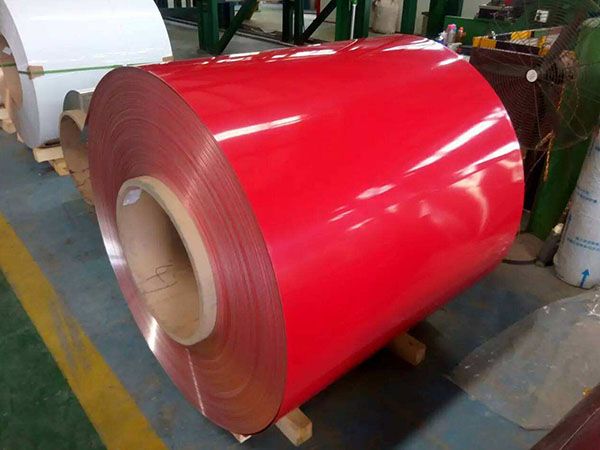
1. Core Differences in Molecular Structure
The performance differences between PE (polyester) and PVDF (fluorocarbon) coatings stem from the fundamental differences in their molecular structures.
PE coatings use polyester resin as a base material, containing ester bonds in the molecular chain with a bond energy of approximately 300 kJ/mol. While this can form a dense decorative and protective layer, the ester bonds are relatively unstable and prone to breakage under long-term ultraviolet radiation, leading to aging problems such as chalking and fading.
PVDF coatings, with polyvinylidene fluoride resin as their core, contain highly stable C-F bonds in their molecular structure, with bond energies reaching up to 500 kJ/mol. The tightly packed molecular arrangement is not easily broken, effectively creating a "double armor" of weather resistance and corrosion protection for the aluminum plate.
2. Differentiated Performance in Extreme Environments
- Weather resistance:
After 12 years of natural exposure testing in Florida, the PVDF coating showed 80% higher color retention and UV resistance than the PE coating. It withstood over 4000 hours of QUV accelerated aging testing, achieving an outdoor service life of 15-25 years. It easily copes with the complex climates of North America, including high altitudes, strong UV radiation, and seasonal temperature variations. The PE coating's outdoor service life is only 5-8 years, and it ages and degrades rapidly in coastal areas and high-UV regions.
- Corrosion resistance:
PVDF coatings effectively resist corrosion from high salt spray in coastal areas and acidic/alkaline media in chemical industrial parks. After thousands of hours of neutral salt spray testing, no blistering or rusting was observed, making it the preferred choice for corrosive environments. PE coatings are only suitable for indoor or non-corrosive environments and cannot withstand complex and harsh outdoor corrosive conditions.
- Processability:
PE coatings offer excellent flexibility and outstanding T-bending performance, making them suitable for complex molding applications such as ceilings, roller shutters, and irregularly shaped parts, with lower processing losses. PVDF coatings are relatively hard and brittle; bending and stamping require specialized techniques to control force and angle to avoid cracking, making them more suitable for static structures such as curtain walls and exterior wall panels.
3. Scenario Adaptability and Cost Balance
- PE coated aluminum sheet: The cost-effective choice
PE coatings cost only 30%-50% of PVDF coatings, while offering high gloss and a wide range of colors. They can meet the needs of interior decoration, ordinary temperate inland factories, and cost-sensitive projects, making them the preferred choice for those seeking short-term economic efficiency and basic protection.
- PVDF coated aluminum sheet: Standard for high-end projects
While PVDF coatings have a higher initial cost, their maintenance cycle can be extended to over 20 years, resulting in a lower average annual cost. They are widely used in North American landmark buildings, coastal airports, chemical plants, and other scenarios with stringent requirements for durability and corrosion resistance. BCM Aluminum provided PVDF-coated aluminum sheets for a coastal project in Vancouver, Canada. After 18 years of service, the coating still exhibited uniform color and a gloss loss rate of less than 15%, verifying its reliability in extreme environments.
4. Selection Recommendations:
Selection is essentially a balance between needs and long-term value:
If the project is an indoor setting in a temperate environment and prioritizes cost-effectiveness, PE coated aluminum sheets are sufficient.
If the project is exposed to extreme outdoor climates or corrosive conditions for extended periods, and low maintenance costs and longevity are paramount, PVDF coated aluminum sheets are the better solution.
We can provide customized coating solutions and third-party testing reports based on the client's project location (coastal/inland), expected service life, and budget, helping North American clients achieve the optimal balance between performance and cost.
There is no absolute superiority or inferiority between PE and PVDF coated aluminum sheets; the key lies in adapting to project requirements. With years of experience serving the North American market, BCM Aluminum provides comprehensive technical support to clients, from coating selection to processing implementation, ensuring project quality and long-term value.